Hoxton Garden, 2023–24
The project is in the garden of a grade II listed late-Georgian terraced house within a conservation area in east London.
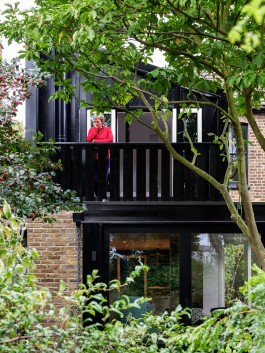
The garden contained a derelict outbuilding, was in an overgrown condition and was overshadowed by two large neighbouring trees. The access walkways of an adjacent apartment block also overlook the garden.
A diversity of wildlife could be seen visiting the garden, perhaps partly because it had been left unattended for many years, but also its proximity to a local canal. The client and their family were keen to use the garden, but to share it with the variety of plants and animals.


Existing garden

Initial sketches
Shade tolerant, low-intervention, native woodland species were introduced around a new pond, enhancing the habitat for invertebrates and visiting birds and mammals.


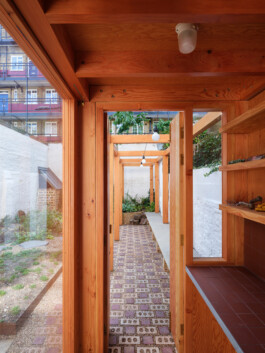
The derelict outbuilding has been replaced with a new timber-framed outbuilding on a similar footprint. The lightweight structure sits on screw pile foundations and was designed as a kit of parts that could be easily handled and installed using predominantly hand tools. Where possible, standard and modular material dimensions have been used to reduce cutting and minimise on-site wastage.

Existing plan

Remodelled plan

Section

Elevation


Cross sections
The structure extends the length of the garden, supporting different uses, including garden storage, cold-frame (currently used as an outdoor workspace), kitchenette, outdoor dining and a hammock. At the end of the garden, the frame geometry yields to an existing cherry tree, retained as part of the proposals.


The roof over the outbuilding is formed as a zinc-clad planter for wild flowers (seen from the kitchen window at upper ground level).
The structural frame is made from UK sourced Douglas fir, and the bench is Yorkstone. The ground surface is perforated brick with red stained oak cobbles, set in fine shingle. The same brick is used for raised beds and a compost bin.


Related projects:
Hoxton Garden, 2023–24
The project is in the garden of a grade II listed late-Georgian terraced house within a conservation area in east London.
The garden contained a derelict outbuilding, was in an overgrown condition and was overshadowed by two large neighbouring trees. The access walkways of an adjacent apartment block also overlook the garden.
A diversity of wildlife could be seen visiting the garden, perhaps partly because it had been left unattended for many years, but also its proximity to a local canal. The client and their family were keen to use the garden, but to share it with the variety of plants and animals.


Existing garden

Initial sketches
Shade tolerant, low-intervention, native woodland species were introduced around a new pond, enhancing the habitat for invertebrates and visiting birds and mammals.


The derelict outbuilding has been replaced with a new timber-framed outbuilding on a similar footprint. The lightweight structure sits on screw pile foundations and was designed as a kit of parts that could be easily handled and installed using predominantly hand tools. Where possible, standard and modular material dimensions have been used to reduce cutting and minimise on-site wastage.

Existing plan

Remodelled plan

Section

Elevation


Cross sections
The structure extends the length of the garden, supporting different uses, including garden storage, cold-frame (currently used as an outdoor workspace), kitchenette, outdoor dining and a hammock. At the end of the garden, the frame geometry yields to an existing cherry tree, retained as part of the proposals.


The roof over the outbuilding is formed as a zinc-clad planter for wild flowers (seen from the kitchen window at upper ground level).
The structural frame is made from UK sourced Douglas fir, and the bench is Yorkstone. The ground surface is perforated brick with red stained oak cobbles, set in fine shingle. The same brick is used for raised beds and a compost bin.


Related projects: